
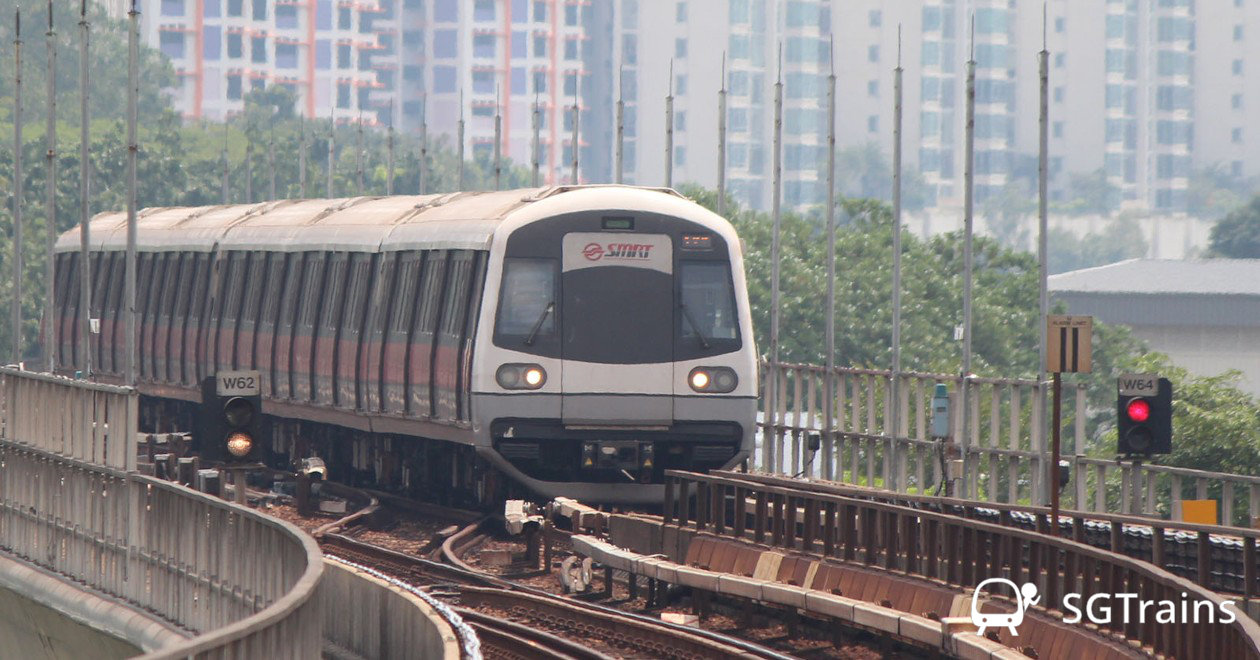
Train faults caused by signalling system failures on board trains could soon be recovered much more quickly, with the Land Transport Authority (LTA) and SMRT Trains trialling a proof of concept (PoC) for an onboard backup signalling system.
Interested in reading more of our future posts?
Follow us on Facebook, Instagram, WhatsApp, and Telegram for the latest updates!
Proposed recommendation by Rail Reliability Taskforce
Following a series of unrelated train disruptions between July and September 2025, involving the signalling system, power supply system, and trains, across various MRT and LRT lines, the Rail Reliability Taskforce had recommended addressing several areas for improvement.
One area was to improve the signalling system, including the proposed recommendation on exploring the feasibility of implementing a bypass feature allowing a train with an onboard signalling system fault to be manually driven at slower speeds.
SEE ALSO: Rail Reliability Taskforce: All the recommendations to strengthen Singapore’s rail network reliability »
The signalling system can be thought of as the “traffic light” system for a railway line, maintaining safe separation of trains, and routing trains to the correct tracks, as well as automatically operating trains from one station to another, adhering to the given timetable.
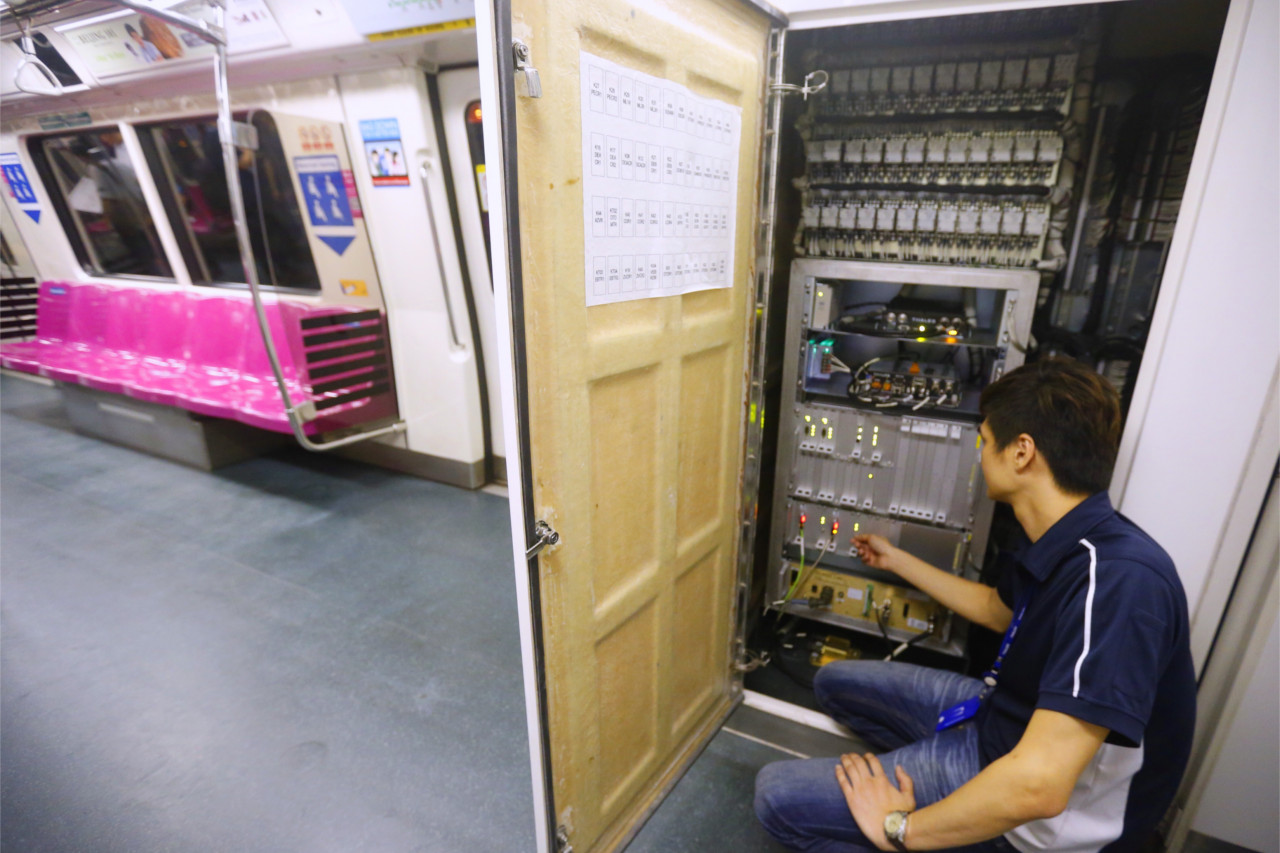
The Vehicle On-Board Controller (VOBC) of the Communications-Based Train Control (CBTC) signalling system installed in an MRT train. (Image: Ernest Chua/TODAY)
Currently, trains with an onboard signalling system fault – such as the Vehicle On-Board Controller (VOBC) failure in the Communications-Based Train Control (CBTC) signalling system – will activate braking to a complete stop by design, as part of a safety feature.
While the safety feature ensures passenger safety, it can significantly prolong the time for service recovery, leading to the train disruption continuing until a rescue train arrives to push or pull away the stalled train to the train depot or siding.
SEE ALSO: How Could a Safety Feature Delay Train Services for 60 Minutes? »
Proof of Concept for an onboard Smart Automatic Train Control backup signalling system
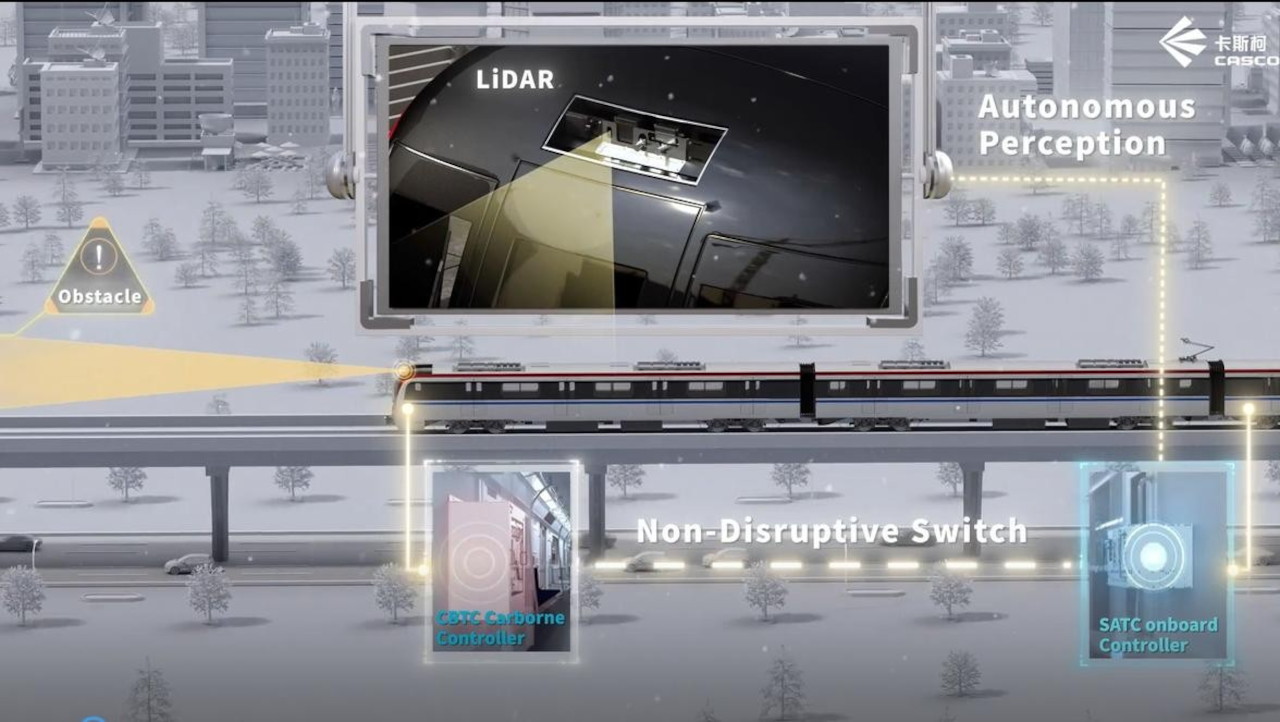
Image: CASCO/China Daily
CASCO Signal, which is a joint venture between China Railway Signal & Communication (CSRC) and Alstom Transport, demonstrated a PoC to LTA and SMRT Trains on its self-developed Smart Automatic Train Control (SATC) system at Bishan Depot.
In a Facebook post on Jul 13, CASCO Signal said: “We did it! SATC high-resilience signalling system made its overseas debut in Singapore! Supported by LTA and SMRT Trains, we’ve successfully completed the PoC test for our self-developed SATC system at Bishan Depot.”

LTA and SMRT Trains evaluating the Smart Automatic Train Control (SATC) proof of concept (PoC) demonstrated by CASCO Signal. (Image: CASCO/Facebook)
CASCO Signal’s SATC system test validated multiple key indicators, including “precise detection of train distance ahead and red-signal voice alerts using LiDAR and cameras.”
In addition, CASCO said its SATC system provides seamless switching between the primary CBTC signalling system and its SATC system, which is a “solid step toward next‑generation urban rail systems and more resilient operations.”
It would not be the first time that trains have dual signalling systems, as older generations of trains on the North-South, East-West lines (NSEWL) were able to switch between the original “legacy” fixed-block and newer CBTC signalling systems during re-signalling works in 2017-18.
CASCO Signal said the SATC system has three core capabilities – autonomous positioning, autonomous perception, and safety protection – enabling trains to accurately detect the distance between trains and assist drivers by intelligent recognition of red signal aspects.
“Even in scenarios such as onboard failures of the primary signalling system, SATC ensures safe and efficient operations, significantly enhancing system resilience and operational continuity, and achieving uninterrupted and non‑degraded operation under fault conditions.”
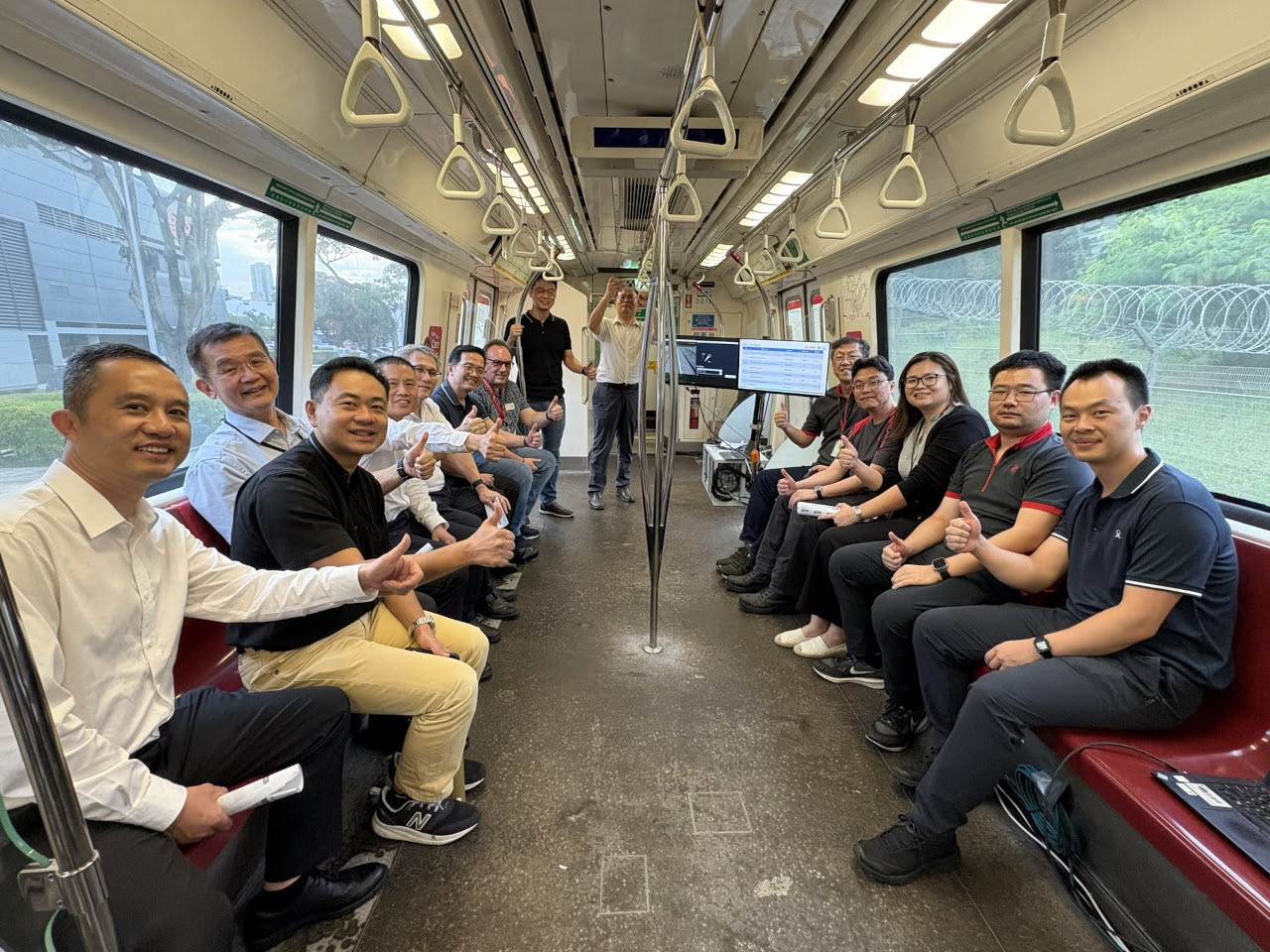
Image: CASCO/Facebook
Recent Posts
Singapore’s Circle Line has finally gone full circle; three new CCL6 stations open on Jul 12, 2026
Downtown Line to end earlier on Fridays, start later on Saturdays, from Jul 10 to Sep 5, 2026
Circle Line Stage 6 public preview on Jul 4, 2026; explore 3 new CCL6 stations with free MRT rides
Related Links
Signalling Systems – SGTrains
External Links
“We did it – SATC high-resilience signalling system made its overseas debut in Singapore! 🚇” – CASCO/Facebook
Images: SGTrains File, Ernest Chua/TODAY, CASCO/China Daily, CASCO/Facebook.
This article first appeared on SGTrains.